





Electric hydrofoiling has rapidly evolved from a niche summer novelty into a year-round aquatic discipline. For dedicated riders, the colder months offer distinct advantages: empty beaches, pristine shorelines, and the unique solitude that comes with frigid environments. However, venturing out during the off-season requires a profound shift in mindset. The margins for error shrink dramatically when temperatures plummet, making site selection the single most critical factor in your pre-ride preparation.
Choosing a suitable Winter eFoil Location is not merely about finding a scenic backdrop; it is an analytical process of risk mitigation. The frigid marine environment demands rigorous assessment of bathymetry, atmospheric airflow, surface turbulence, and maritime transit patterns. A miscalculation in July might result in a long, tiring swim; the same miscalculation in January can trigger a severe survival situation.
1. The Crucial Role of Subsurface Clearance
The foundational metric for any hydrofoiling site is the distance between the ocean surface and the seabed. Because the propulsion unit and wing assembly sit at the bottom of a carbon fiber mast—typically ranging from 70 to 85 centimeters in length—riders require a significant vertical buffer to operate safely.
When evaluating a new area, confirming adequate Water Depth is a non-negotiable safety protocol. A minimum clearance of 1.5 meters is universally recommended by manufacturers and professional instructors. During the colder seasons, the underwater landscape is notoriously unstable. Severe seasonal storms constantly shift sandbars, creating unexpected shallows in areas that were completely clear during the summer.
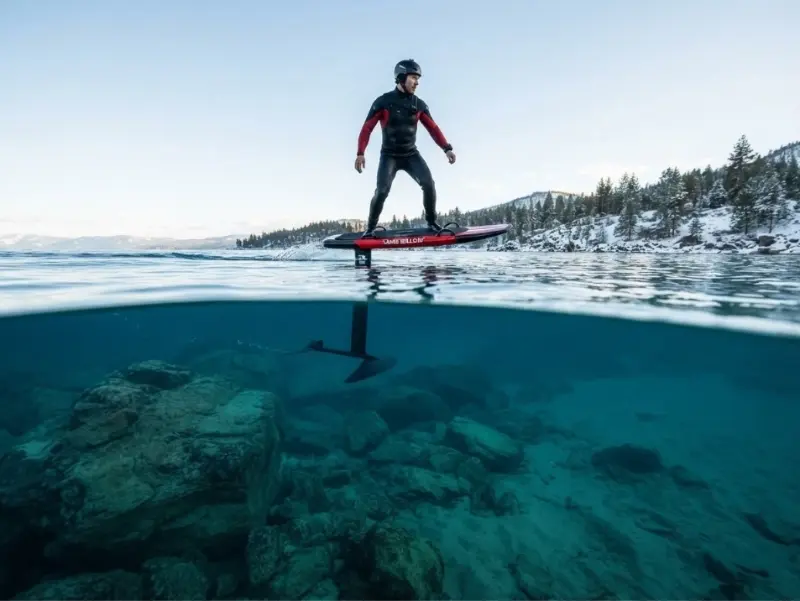
Striking the bottom while traveling at 25 kilometers per hour will result in an immediate, violent halt. The rider is ejected forward by their own momentum, risking severe trauma against the board, the foil assembly, or the reef below. Furthermore, such impacts routinely cause catastrophic damage to the propulsion unit, snapping shear pins, fracturing carbon wings, or breaching the waterproof seals of the motor housing.
To accurately assess bottom clearance:
- Consult Nautical Charts: Utilize modern marine GPS applications to review local bathymetry before leaving home.
- Observe Tidal Swings: Colder months often bring extreme spring tides. An estuary that is perfectly safe at high tide may become an unnavigable mudflat during the ebb.
- Visual Inspection: Before launching, stand on an elevated vantage point. Darker blues and greens generally indicate safe clearance, while lighter turquoise, brown, or white water suggests dangerous shallows.
2. Navigating Atmospheric Airflow
Unlike traditional kitesurfing or sailing, electric hydrofoiling does not rely on aerodynamic propulsion. In fact, strong atmospheric movement is generally a detriment to the eFoiling experience, creating instability and draining battery reserves as the rider constantly battles aerodynamic drag.
Managing Wind is an absolute priority when planning a session in frigid temperatures. Moving air strips away body heat exponentially faster than still air, drastically accelerating the onset of hypothermia. Before suiting up, riders must analyze both the velocity and the directional vector of the breezes.
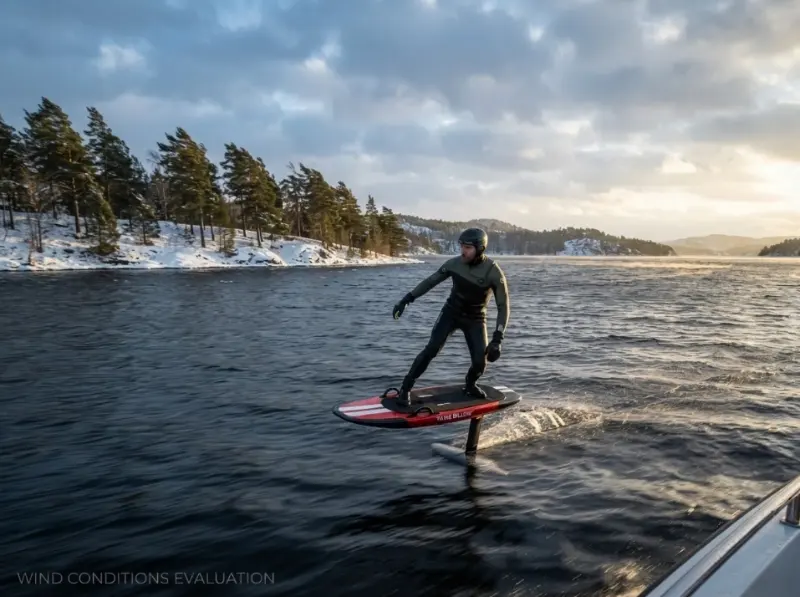
Offshore breezes—currents blowing from the land out toward the open sea—represent the most severe hazard. If your battery depletes, a fuse blows, or the handheld controller loses synchronization, you immediately become a passive passenger. An offshore gale will rapidly push a stranded rider away from safety, turning a mechanical failure into a coast guard emergency. Conversely, onshore breezes will safely blow a disabled rider back to the beach, though they often generate frustrating surface chop.
For optimal safety, seek out bays, harbors, or inland lakes sheltered by geographical features like cliffs, dense forests, or coastal architecture. If the treetops are swaying aggressively or you observe whitecaps forming offshore, it is highly advisable to postpone the session.
3. Managing Surface Turbulence
The magic of electric hydrofoiling lies in the sensation of frictionless flight. To achieve this, riders seek out the flattest possible surface conditions. During the off-season, achieving this glass-like perfection becomes increasingly difficult due to volatile storm systems.
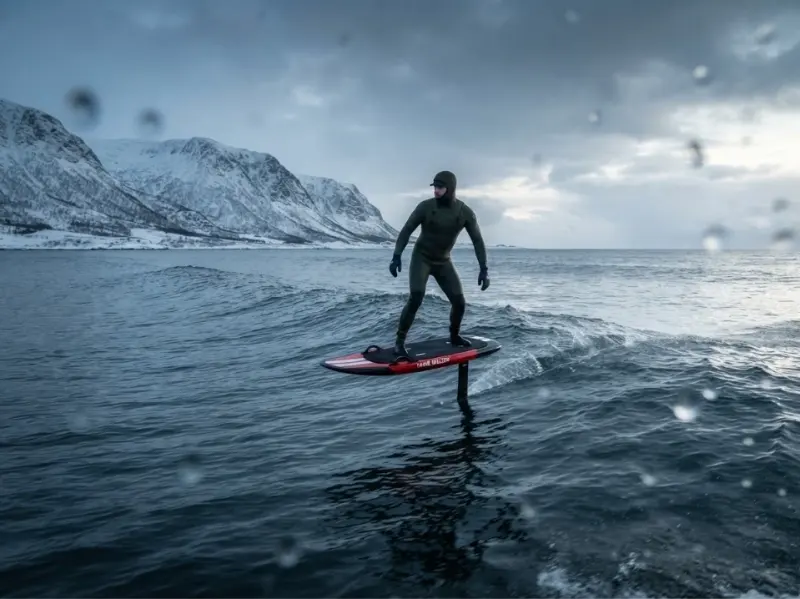
Oceanic Waves present a multifaceted challenge for both beginners and advanced riders. While highly skilled foilers can carve down the face of rolling swells, the journey from the beach to the open water is fraught with danger. The most critical hazard zone is the shore breaker. Carrying a 30-kilogram electric board equipped with razor-sharp carbon fiber wings through pounding surf is exceptionally dangerous. A single misstep can result in the board being thrown back at the rider by a crashing breaker.
Once past the break zone, riders must contend with oceanic chop. Short-period ripples constantly disrupt the foil’s equilibrium, requiring relentless micro-adjustments from the rider’s legs. This accelerates muscular fatigue, a condition that is already exacerbated by heavy neoprene suits and cold temperatures. When evaluating a spot, look for long, rolling groundswells rather than chaotic, choppy surfaces. If the surf zone looks too aggressive to comfortably wade through with heavy equipment, seek an alternative launch site, such as a protected marina ramp or an inland waterway.
4. Vessel Transit and Collision Avoidance
A common misconception is that the oceans and lakes are entirely empty during the colder months. While recreational speedboats and jet skis are largely absent, commercial operations continue year-round.
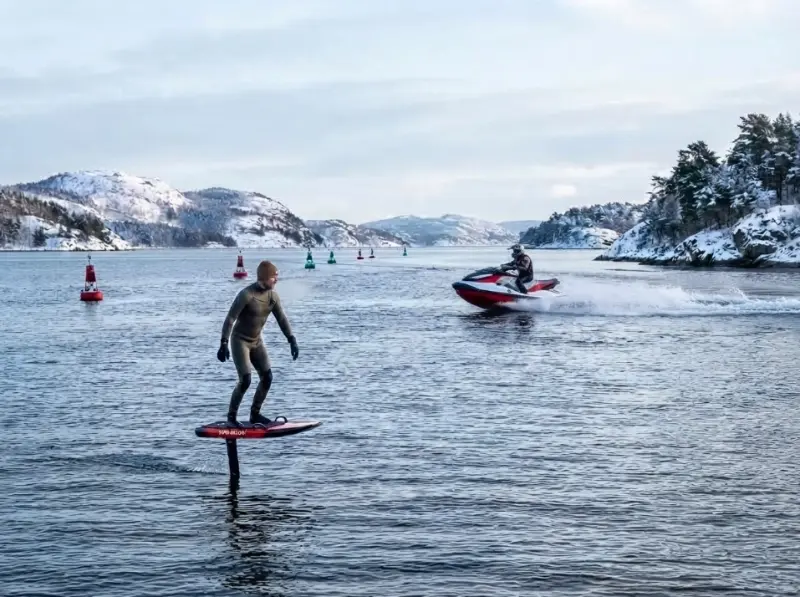
Monitoring Boat Traffic is essential because commercial fishing trawlers, tugboats, ferries, and cargo ships maneuver slowly and possess massive blind spots. As a hydrofoiler, you represent a highly unusual visual profile to a ship’s captain. You are suspended above the surface, moving at high speeds in unpredictable carving patterns. Furthermore, winter skies are frequently overcast, and heavy sea fog can roll in with little warning, severely degrading visibility.
To mitigate collision risks:
- Avoid Shipping Lanes: Never ride in designated transit channels or harbor entrances.
- Enhance Visibility: Wear a brightly colored, neon helmet and an impact vest with reflective paneling.
- Maintain Situational Awareness: The motorized hum of your foil, combined with a thick neoprene hood, will drastically reduce your hearing. You must constantly scan the horizon over both shoulders to ensure you are not crossing the path of a faster or larger vessel.
5. Equipment Diagnostics and Thermal Management
The environment is only half of the equation; your equipment’s reaction to freezing temperatures is equally important. Lithium-ion batteries experience a severe drop in chemical efficiency when exposed to cold. Internal resistance increases, meaning a battery that provides 90 minutes of ride time in July may only yield 55 minutes in January. Furthermore, low-voltage cutoffs can trigger suddenly, shutting down the propulsion system without the usual warning periods.
To preserve battery integrity, store the power cell indoors at room temperature until the exact moment of departure. Transport it in the heated cabin of your vehicle, not in an uninsulated trunk. Additionally, freezing temperatures cause the rubber O-rings and waterproofing seals on the board’s hatch to contract and harden. Always apply a fresh coat of marine-grade dielectric grease to these seals before a cold-weather session to prevent microscopic water ingress.
Regarding personal thermal protection, abandon aesthetics in favor of survival. A 5/4mm or 6/5/4mm hooded wetsuit is mandatory, featuring blind-stitched and glued seams. Split-toe neoprene boots provide the best compromise between warmth and tactile board feel, while pre-curved neoprene gloves will prevent your forearms from cramping while gripping the Bluetooth throttle controller.
Site Assessment and Preparation Matrices
To streamline your pre-ride evaluation, utilize the following professional matrices to ensure all safety parameters have been meticulously checked.
Table 1: Environmental Condition Assessment Matrix
| Parameter | Optimal Condition (Green Light) | Marginal Condition (Yellow Light) | Critical Hazard (Red Light) |
|---|---|---|---|
| Subsurface Clearance | 2.5+ meters, sandy bottom | 1.5 – 2.5 meters, rocky reef | Less than 1.5 meters, shifting sandbars |
| Atmospheric Airflow | 0 – 8 knots (calm to light breeze) | 9 – 15 knots (cross-shore drafts) | 16+ knots, strictly offshore gusts |
| Surface Texture | Glassy, flat, zero swell | Light rolling chop, predictable surf | Pounding shore breakers, chaotic cross-chop |
| Maritime Transit | Isolated bay, zero motorized craft | Occasional local fishing vessels | Active commercial shipping lanes, ferries |
Table 2: Thermal Protection and Ride Duration Guide
| Combined Air + Sea Temp | Recommended Neoprene Configuration | Extremity Protection Required | Max Recommended Session |
|---|---|---|---|
| Above 25°C | 3/2mm Full Suit | None | 90 – 120 Minutes |
| 15°C to 24°C | 4/3mm Full Suit | 3mm Boots | 60 – 90 Minutes |
| 5°C to 14°C | 5/4mm Hooded Suit | 5mm Boots, 3mm Gloves | 40 – 60 Minutes |
| Below 5°C | 6/5/4mm Hooded Suit | 7mm Boots, 5mm Mittens | 20 – 30 Minutes |
Conclusion
Riding above the water during the tranquil, frozen months is an incredibly rewarding experience, offering unmatched solitude and striking coastal scenery. However, this pursuit requires the mindset of an aviator rather than a casual beachgoer. By rigorously analyzing bottom clearance, atmospheric gusts, surface swells, and marine transit patterns, you can successfully mitigate the elevated risks of the off-season. Respect the environment, maintain your lithium-ion equipment meticulously, and always prioritize thermal safety. With the right preparation, the coldest season can easily become your most productive time on the water.
