








In recent years, the world of motorized water sports has experienced exponential growth, offering enthusiasts entirely new and exhilarating ways to interact with the water. At the absolute pinnacle of this technological revolution are two extraordinary machines: the eFoil (electric hydrofoil) and the Jetboard (motorized surfboard). By eliminating the need for favorable wave conditions, wind, or a towing boat, both devices have granted riders unprecedented freedom on oceans, lakes, and rivers worldwide.
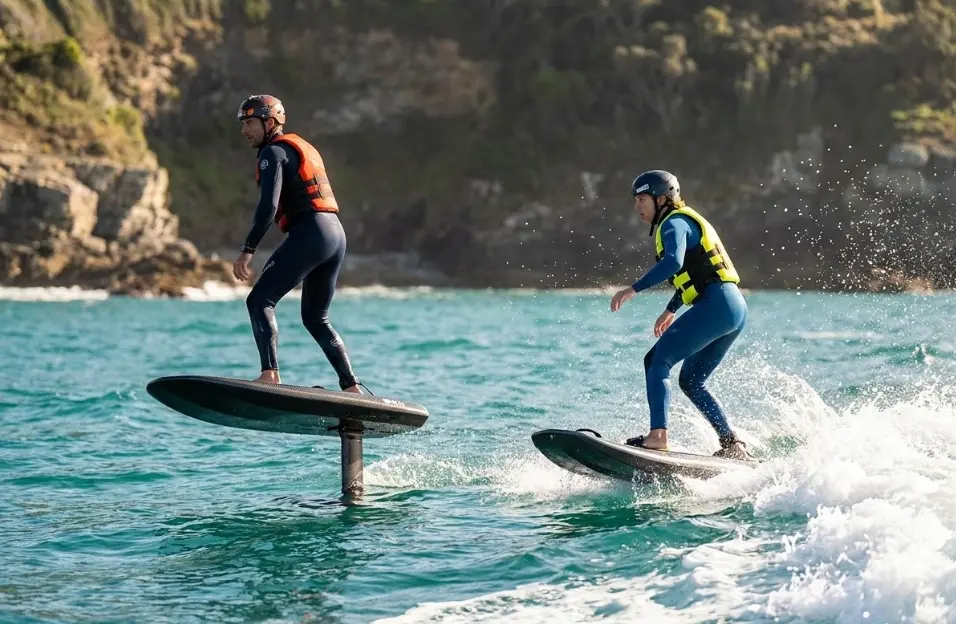
While both options promise the thrill of gliding across the water, the actual physical experiences, technical requirements, and ideal use cases they offer are radically different. If you are considering investing in a premium personal watercraft, making the right choice depends heavily on your riding style, athletic background, local water conditions, and logistical capabilities.
1. Flying vs. Carving
The most fundamental difference between an eFoil and a Jetboard lies in the sensory experience and the physics of how they interact with the water.
The eFoil operates using an underwater wing (hydrofoil) attached to a mast extending below the board. As you accelerate using the Bluetooth handheld controller, the submerged wing generates hydrodynamic lift. Once a certain speed is reached, the entire board and the rider are lifted completely out of the water. The sensation is universally described as “flying.” Because the board is detached from the surface tension, the ride is incredibly smooth, silent, and virtually frictionless. It feels like riding a magic carpet. If you seek a futuristic, serene, and almost meditative water lifestyle, the eFoil delivers an unmatched sensation of levitation.
Conversely, the Jetboard is deeply rooted in traditional surfing and wakeboarding mechanics. It is driven by a powerful internal jet propulsion system that sucks water in and blasts it out the rear. Throughout the entire ride, the hull of the board remains in direct, aggressive contact with the water’s surface. This experience is highly dynamic, fast-paced, and physically engaging. Jetboards are designed to carve deeply into the water, allowing riders to feel the raw power of the motor and the visceral impact of the spray. If you crave high-adrenaline action, aggressive turns, and the classic feeling of shredding the water, the Jetboard perfectly translates that high-octane energy.
2. Learning Curve and Accessibility
When adopting any new board sport, the time required to achieve basic proficiency is a major consideration.
The eFoil is notorious for having a slightly steeper initial learning curve, primarily because it introduces a completely new physical sensation. When transitioning from surface riding to foil-borne flight, a rider must manage balance across three dimensions: pitch (nose up/down), roll (side-to-side), and yaw (left/right rotation). This 3D balancing act can feel unnatural at first. However, modern eFoil wings are highly stabilized. Most beginners, with proper instruction, can achieve sustained flight within their first 1 to 2 hours. Once that “click” happens and muscle memory takes over, cruising becomes remarkably intuitive and requires very little physical exertion.
The Jetboard generally offers a flatter initial learning curve, especially for individuals with prior experience in snowboarding, surfing, skateboarding, or wakeboarding. Because the board remains on the surface, the 2D balance requirement (front-to-back and side-to-side weight distribution) feels instantly familiar. Beginners typically start by lying on their stomachs, transitioning to their knees, and finally standing up as the board gains momentum and stability. While standing up is easier, the true challenge of a Jetboard lies in mastering high-speed maneuvers and maintaining stamina, as your legs must constantly absorb the shocks of surface bumps and chop.
3. Performance: Speed and Agility
Both machines boast impressive performance metrics, but they channel their power in vastly different ways.
The Jetboard is the undisputed king of raw speed and aggressive agility. High-end electric surfboards can effortlessly reach top speeds exceeding 35 mph (56 km/h) and possess blistering, arm-stretching acceleration. They are built for sharp, aggressive carves. Experienced riders can bury the rail into the water, throw massive sprays, and even use the wake of passing boats to launch into the air. For speed demons and those who want to push their athletic limits, the Jetboard provides a limitless performance ceiling.
The eFoil, by contrast, prioritizes hydrodynamic efficiency, range, and a fluid cruising experience over extreme top-end speed. This does not mean they are slow—most premium eFoils max out between 25 to 30 mph (40 to 48 km/h), which feels incredibly fast when elevated above the surface. The agility of an eFoil is characterized by smooth, sweeping, majestic turns, heavily resembling carving through deep, untouched powder snow. Its true performance advantage is sustained momentum; the foil slices cleanly through the water, allowing the rider to maintain high speeds effortlessly, regardless of the chaotic surface conditions above.
Executive Comparison Matrix
|
Feature / Dimension |
eFoil (Electric Hydrofoil) |
Jetboard (Motorized Surfboard) |
|---|---|---|
|
Sensation |
Smooth, silent flying above water |
Aggressive, fast-paced surface carving |
|
Balance Axis |
3D (Pitch, Roll, Yaw) |
2D (Front/Back, Side/Side) |
|
Top Speed |
25 – 30 mph (40 – 48 km/h) |
35+ mph (56+ km/h) |
|
Average Ride Time |
90 – 120+ minutes |
30 – 45 minutes |
|
Ideal Water Conditions |
Versatile (handles chop/waves well) |
Glassy, flat water preferred |
|
Minimum Depth Need |
Deep water (approx. 3-4 feet) |
Shallow water capable (approx. 1.5 feet) |
|
Assembly Required |
Yes (Mast, wing, battery) |
No (Plug-and-play battery) |
4. Battery Life and Ride Duration
Because neither device relies on a continuous supply of gasoline, the efficiency of their electric drivetrains dictates the duration of your session. Here, the laws of physics dictate a clear winner.
The eFoil possesses a massive, insurmountable advantage in battery life. By lifting the board out of the water, the system eliminates almost all hydrodynamic drag associated with hull friction. Once in flight, the electric motor requires minimal energy to maintain speed. Depending on the rider’s weight, the wing size, and the battery capacity, a single charge on an eFoil can easily yield 90 minutes of continuous riding, with some setups exceeding 2 hours. This allows for extensive coastal exploration and long-distance cruising.
The Jetboard, conversely, is locked in a constant battle against water resistance. Pushing a hull through the water surface requires a tremendous amount of continuous energy output from the battery. As a result, ride times are significantly shorter. A typical high-intensity session on a Jetboard will drain the battery in 30 to 45 minutes. Riders who plan to spend the whole afternoon on the water will inevitably need to invest in highly expensive spare batteries.
5. Water Conditions
The geographical location where you plan to ride should heavily influence your purchasing decision, as these boards interact with the environment differently.
The eFoil is incredibly versatile when it comes to surface conditions. Because you are flying a few feet above the surface, the foil simply cuts through underwater currents while completely ignoring surface chop, wind waves, and boat wakes. You can experience a perfectly smooth, glassy ride even on a windy day or in a busy harbor that would bounce a traditional surfboard around violently. However, this vertical clearance comes with a strict depth requirement; you need at least 3 to 4 feet of water to avoid violently crashing the foil into rocks or sandbars.
The Jetboard demands different conditions. It performs flawlessly on flat, glassy lakes, calm bays, or winding rivers. Because the hull skips across the surface, the rider feels every single ripple and wave. Riding a Jetboard in heavy chop is not only exhausting on the knees and lower back but also limits your ability to execute clean turns. The distinct advantage of the Jetboard, however, is its shallow-water capability. Without a long mast, you can navigate shallow sandbars, narrow creeks, and launch right from the water’s edge.
6. Portability and Weight
These are sophisticated pieces of heavy machinery containing large lithium-ion battery packs. Transporting them requires planning.
The eFoil is a highly modular system. It consists of the main board, the heavy battery, the mast, and the front and rear wings. While breaking it down makes it possible to fit into the back of a standard SUV, a station wagon, or even a large hatchback, it is a tedious process. You will need to spend 5 to 10 minutes assembling the heavy components with tools on the beach before riding. Fully assembled, an eFoil setup typically weighs between 60 to 80 lbs (27 – 36 kg).
The Jetboard is generally a unibody design. Aside from removing the battery for charging, there is no assembly required. You arrive at the beach, insert the battery, and you are ready to ride. However, their monolithic shape makes them harder to fit inside standard vehicles. Most owners transport their Jetboards on car roof racks, similar to a kayak or paddleboard. Including the battery, a Jetboard is quite heavy, often tipping the scales between 70 to 90 lbs (32 – 41 kg), requiring a sturdy cart or a friend to help carry it to the shoreline.
7. Durability and Maintenance
Saltwater is the natural enemy of modern electronics and moving metal parts. Both boards require diligent maintenance to protect your investment.
The eFoil has crucial moving components permanently submerged. After every single saltwater use, the mast, the foil wings, and the motor housing must be thoroughly flushed with fresh water to prevent galvanic corrosion. The electrical contacts between the board and the mast require regular application of dielectric grease. Because it flies above the water, the board itself is largely protected from floating debris, but a high-speed underwater impact against a rock can cause catastrophic damage to the foil and motor.
The Jetboard also demands rigorous post-ride flushing, specifically focusing on the internal jet pump and cooling lines. The jet intake grate located on the bottom of the board is susceptible to sucking in seaweed, plastic bags, or small pebbles, which can severely damage the internal impeller. Riders must frequently inspect and clear this intake. Furthermore, because the board rides on the surface, the hull is much more prone to cosmetic scratches, dings, and gel-coat damage from docks, floating debris, and beaching.
8. Price and Investment Budget
Make no mistake: both the eFoil and the Jetboard are luxury items representing the absolute cutting edge of personal watercraft technology.
The eFoil generally commands a higher premium. The complex hydrodynamic engineering required to create stable lift, combined with lightweight carbon fiber construction, aerospace-grade aluminum masts, and massive battery packs, drives up manufacturing costs. Entry-level models from reputable brands start around $10,000, while high-performance, ultra-lightweight carbon models can easily exceed $15,000.
The Jetboard offers a slightly lower barrier to entry, though it remains a substantial investment. You can find quality entry-level motorized surfboards starting in the $6,000 to $8,000 range. However, if you desire extreme speed, premium materials, and elite performance, top-tier Jetboards will match the pricing of premium eFoils, landing comfortably in the $12,000 to $15,000 bracket.
Which is Right for You?
Choosing between an eFoil and a Jetboard ultimately comes down to the specific feeling you want to capture on the water.
Choose the eFoil if:
-
You desire the surreal, silent, and magical sensation of flying above the water.
-
You prioritize long ride times (1.5 to 2 hours) and long-distance exploration on a single charge.
-
Your local waters are frequently choppy, windy, or heavily trafficked by boats.
-
You prefer a smooth, graceful, and physically less exhausting cruising experience.
TAME BILLOW eFoil – Your Best eFoil Choose
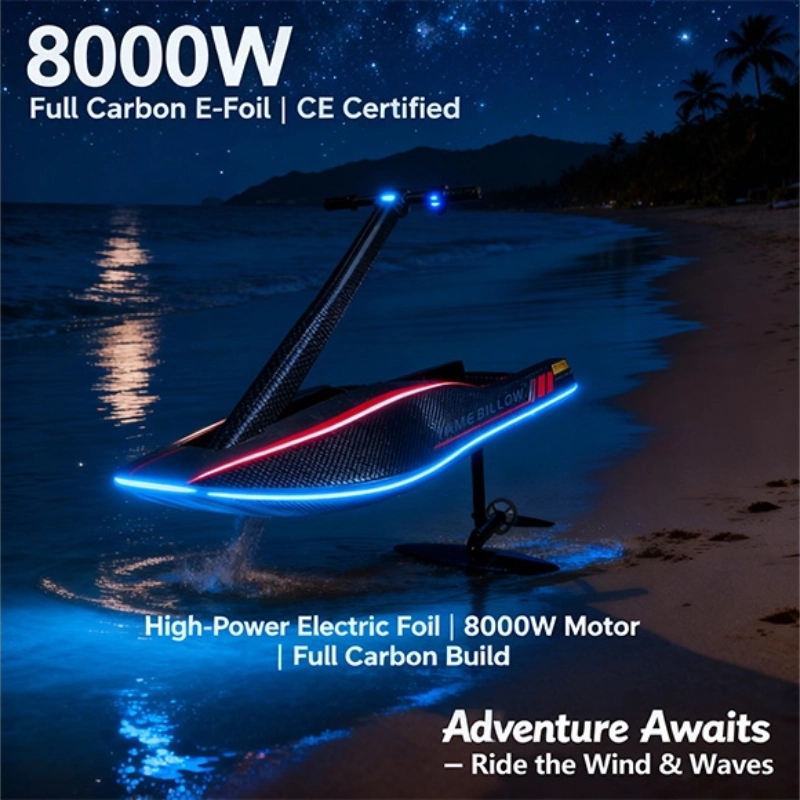 |
Color: Black or customized BoardBoard Material: EPS core + Carbon fiber+epoxy resin Motor powerWattage: 8000W or customized Remote ControlFeatures: Wireless remote controller or via handbar |
Choose the Jetboard if:
-
You crave high-speed adrenaline, aggressive carving, and dynamic physical exertion.
-
You want a ride that closely mimics traditional surfing, wakeboarding, or snowboarding.
-
You have access to flat, glassy water conditions (like calm lakes or sheltered bays).
-
You need a board that can operate in shallow waters without the risk of destroying an underwater mast.
Whichever path you choose, both machines offer an unforgettable, life-changing way to interact with nature.
FAQ
1. Which board is safer for a complete beginner with no watersports background?
Neither is inherently dangerous if used responsibly, but they present different risks. For a complete beginner, the Jetboard is often perceived as safer because falls happen at the water level, similar to falling off a wakeboard. The eFoil requires falling from an elevated position (2-3 feet in the air), and there is a slight risk of striking the submerged mast or wing underwater. Beginners on an eFoil must strictly follow the rule of “falling away” from the board and should always wear a certified helmet and an impact vest.
2. How difficult is it to deal with saltwater corrosion on these devices?
Saltwater maintenance is mandatory for both. If you neglect it, you will destroy a $10,000 machine within a season. The eFoil is slightly easier to clean visually because the parts are external; you rinse the mast, wing, and motor pod, and grease the electrical connections. The Jetboard requires flushing the internal jet pump and cooling lines with fresh water using a hose attachment. Both take about 10-15 minutes of cleaning after a session.
3. If I want to travel frequently in a camper van or SUV, which is easier to pack?
The eFoil is significantly better for van-life and interior vehicle storage. Because it is modular, you can detach the long mast and wings from the board. The board can slide under a bed, and the mast fits in a carrying case. The Jetboard, conversely, is a solid, heavy 5-to-6-foot block. Unless you have a massive cargo area, you will almost certainly need to mount a Jetboard on an exterior roof rack for travel.
